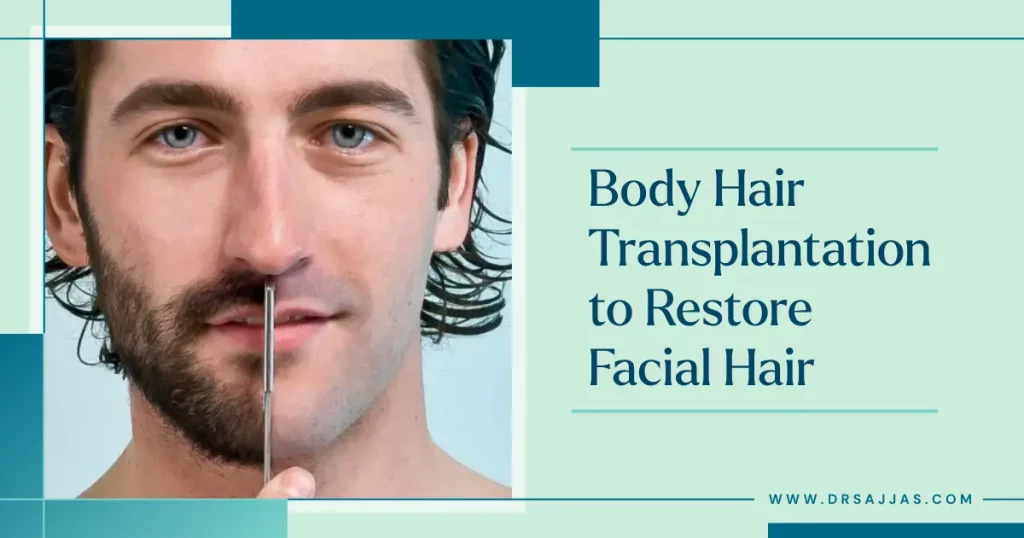
When considering body hair transplantation for beard, mustache, eyebrow, or scar camouflage, the most crucial question isn’t just whether the procedure works—it’s whether the results will last. After investing time, money, and commitment into facial hair restoration, you deserve to know: Is this permanent, or will you be back in the chair years later?
The answer is more reassuring than you might expect, but understanding the science behind transplanted hair longevity reveals important nuances every potential patient should know.
The Lifetime Permanence Promise
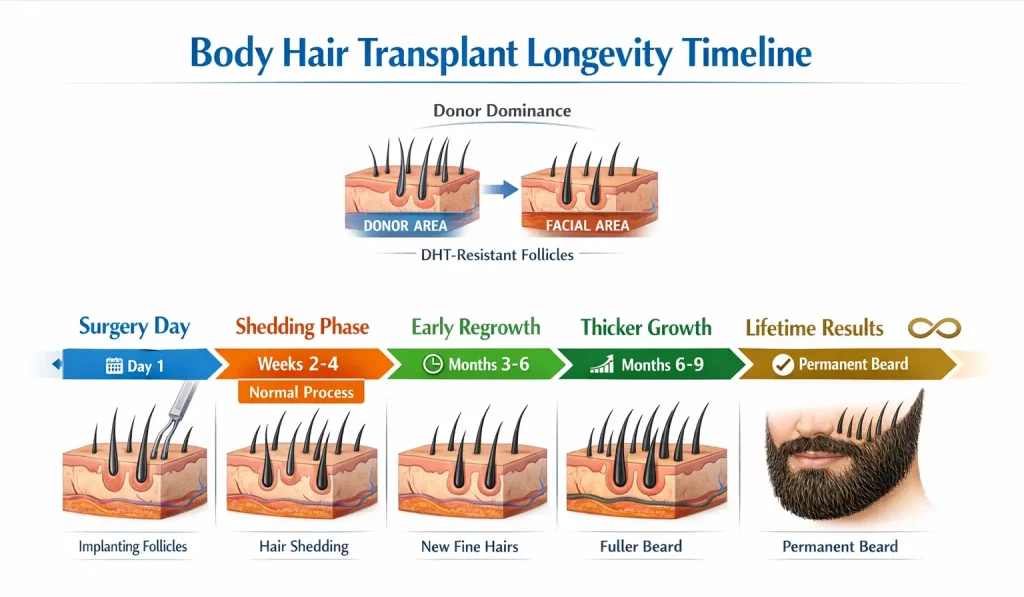
Here’s the fundamental truth about body hair transplantation: Transplanted hair follicles are genetically programmed to last a lifetime. When healthy hair follicles from your scalp’s donor area (typically the back of the head) are transplanted to facial regions, they retain their original characteristics—including their resistance to hair loss and their natural growth cycle.
This means your beard, mustache, or eyebrow transplant should last as long as the hair on the back of your scalp would—which for most people means permanently.
Why Transplanted Hair Behaves Differently
The Donor Dominance Principle
The secret to transplant permanence lies in follicular genetics. Hair follicles from the occipital region (back of scalp) are genetically resistant to DHT (dihydrotestosterone)—the hormone responsible for male pattern baldness.
When these DHT-resistant follicles are moved to facial areas:
- They maintain their genetic programming
- They continue growing for your lifetime
- They resist typical hair loss patterns
- They behave as they would in their original location
This biological principle—called donor dominance—is what makes hair transplantation a permanent solution rather than a temporary fix.
Factors That Influence Longevity
| Factor | Impact on Longevity | What You Can Control |
|---|---|---|
| Surgeon Expertise | Critical—proper depth/angle ensures survival | Choose experienced specialist |
| Donor Hair Quality | Better quality = better longevity | Limited—genetic factor |
| Post-Op Care | Proper care prevents graft loss | Follow all instructions precisely |
| Health Conditions | Autoimmune issues may affect results | Manage underlying health |
| Smoking/Alcohol | Reduces blood flow, compromises healing | Avoid 2–4 weeks pre/post-op |
| Scalp Health | Good circulation supports grafts | Maintain overall health |
| Age | Younger patients may see longer results | Limited control |
What Can Compromise Longevity?
While transplanted hair is designed to last forever, certain factors can affect some grafts:
Poor Surgical Technique
- Grafts planted too shallow: May not establish proper blood supply
- Incorrect angle: Creates unnatural appearance, may affect survival
- Trauma during extraction: Damages follicles before implantation
Inadequate Post-Operative Care
- Scratching or rubbing: Can dislodge newly transplanted grafts
- Premature sun exposure: Burns delicate healing tissue
- Skipping medications: Increases infection risk
- Not following washing protocols: Affects graft survival
Medical Conditions
- Autoimmune disorders: May attack transplanted follicles
- Severe nutritional deficiencies: Compromise hair growth
- Hormonal imbalances: Can affect hair cycling
Lifestyle Factors
- Chronic stress: Disrupts normal hair cycling
- Smoking: Reduces blood flow to healing tissue
- Poor nutrition: Limits resources for hair growth
Special Considerations for Different Applications
Beard Transplants
- Exceptionally durable due to facial blood supply
- May continue thickening slightly over years 2-3
- Requires regular maintenance (trimming/shaping)
Eyebrow Transplants
- Equally permanent but requires more frequent trimming
- Scalp hair grows longer than natural eyebrow hair
- Monthly grooming keeps appropriate length
Scar Camouflage
- Permanent coverage once established
- May require higher density for complete concealment
- Results depend on scar tissue quality
The Bottom Line on Longevity
Body hair transplantation delivers lifetime results when: ✓ Performed by experienced surgeons ✓ Using proper FUE technique ✓ From quality donor areas ✓ With meticulous post-operative care ✓ In patients with realistic expectations
The transplanted hair will grow, require grooming, and last as long as the hair on the back of your scalp—which for most people means permanently. You won’t need repeat procedures, ongoing treatments, or maintenance sessions to keep your results.
One procedure. Lifetime results. Real, permanent facial hair.
Your Journey to Permanent Facial Hair
If you’re ready to invest in facial hair restoration that lasts a lifetime, professional guidance ensures optimal outcomes. Dr. Sajjas Skin, Hair & Laser Clinic specializes in body hair transplantation using advanced FUE techniques that maximize graft survival and create natural-looking results designed to last forever.